How to Choose a Software Development Agency | 2026 Guide

Choosing the wrong development agency is one of the most expensive mistakes a company can make.
I've seen it repeatedly: a founder picks an agency based on a polished website and a cheap quote, then spends months dealing with missed deadlines, buggy code, and communication nightmares. By the time they find a new team to fix the mess, they've lost 6-12 months and burned through their budget.
Here's how to avoid that. After years on both sides of the table — hiring developers and being hired as one — I'll share exactly what to look for, what to avoid, and the questions that separate good agencies from bad ones.
Why Most Agency Searches Fail
Before we get into what to look for, let's address why people make bad choices:
1. They optimize for cost, not value
The cheapest option is almost never the best option. A $15,000 project that takes 6 months and needs to be rebuilt costs more than a $40,000 project that works.
2. They can't evaluate technical competence
If you're not technical, it's hard to tell if an agency actually knows what they're doing. They all claim to be "experts."
3. They skip the discovery process
Good agencies ask lots of questions before quoting. Bad agencies quote immediately without understanding your product.
4. They trust promises over proof
Anyone can claim a 98% client satisfaction rate. What matters is what past clients actually say.
What to Look For
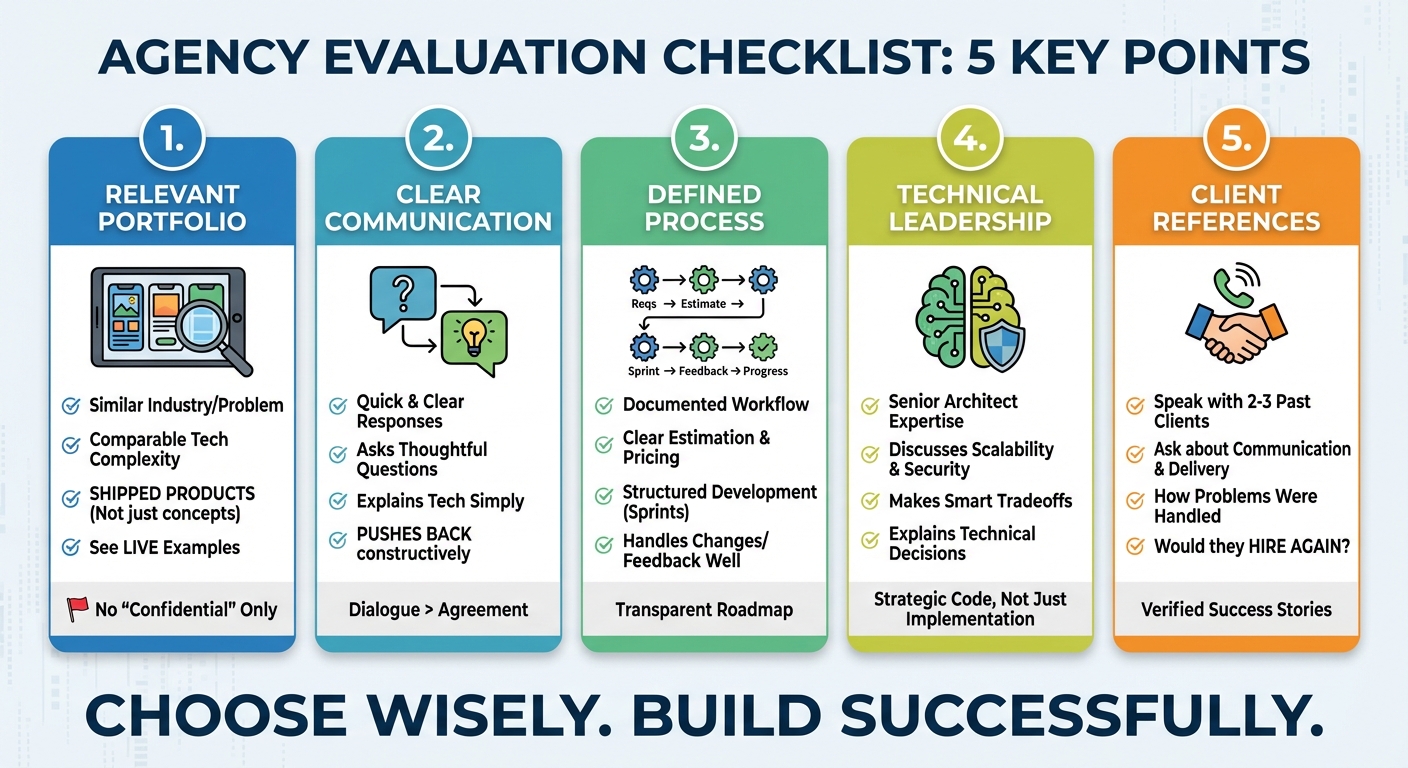
1. Relevant Portfolio
Not just "we've built apps" — look for projects similar to yours:
- Same industry or problem type — They understand the domain
- Similar technical complexity — They've solved comparable challenges
- Shipped products, not just concepts — Ideas are easy; finishing is hard
Ask to see live products they've built. If everything in their portfolio is "confidential," that's a yellow flag.
2. Clear Communication
Pay attention to how they communicate before you hire them:
- Do they respond quickly and clearly?
- Do they ask thoughtful questions?
- Can they explain technical concepts in plain language?
- Do they push back on bad ideas, or just agree with everything?
The way they communicate now is how they'll communicate during the project.
3. Defined Process
Professional agencies have a documented process. Ask them to walk you through:
- How they gather requirements
- How they estimate and price projects
- How development is structured (sprints, milestones)
- How they handle changes and feedback
- How they communicate progress
If they can't explain their process, they don't have one.
4. Technical Leadership
Someone on their team should be able to discuss architecture, scalability, security, and tradeoffs intelligently. You want to work with senior developers who can make good decisions, not just coders who implement whatever you ask.
Ask technical questions even if you don't fully understand the answers. Watch how they explain things.
5. Client References
Ask to speak with 2-3 past clients. Not testimonials on their website — actual conversations. Ask clients:
- What was communication like?
- Did they deliver on time and budget?
- How did they handle problems?
- Would you hire them again?
Agencies with happy clients are happy to make introductions.
10 Red Flags to Avoid
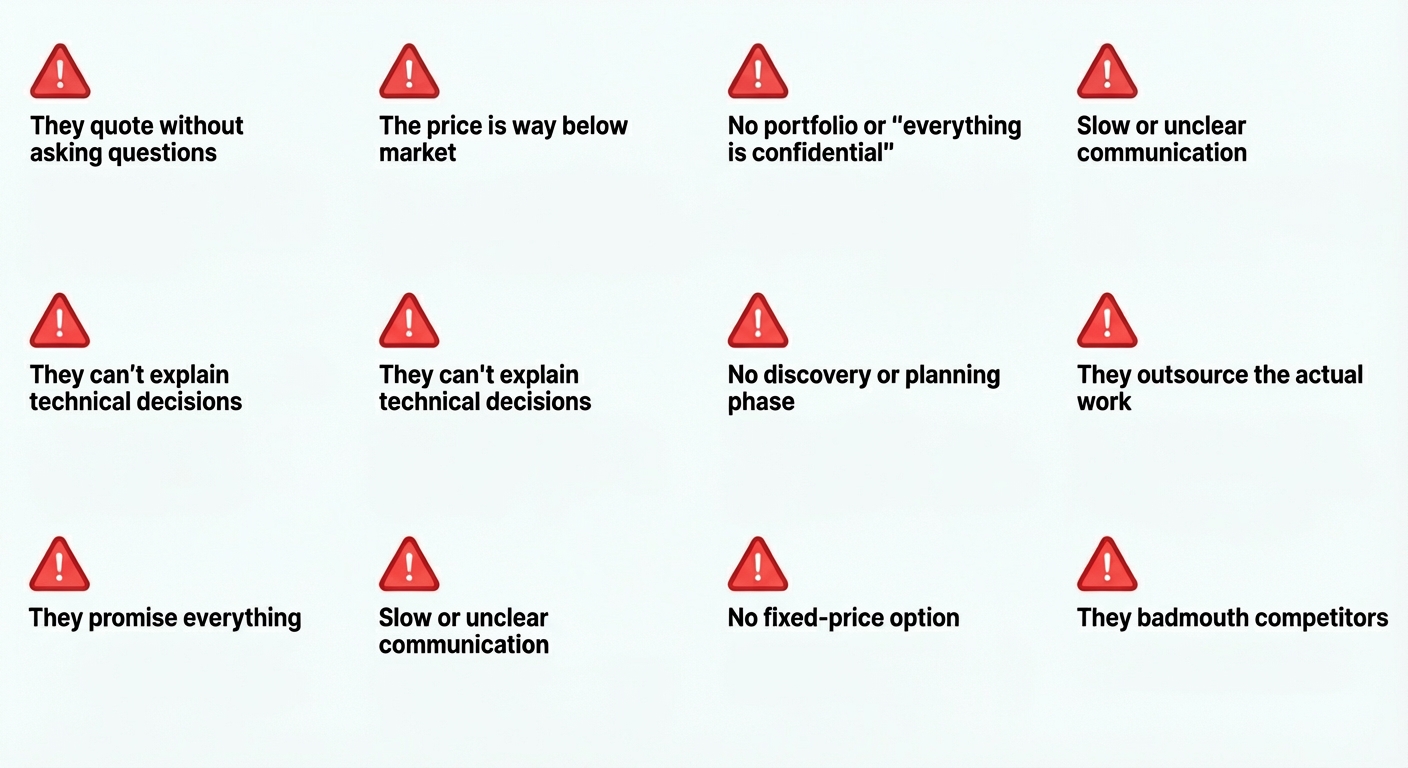
These warning signs indicate problems ahead:
1. They quote without asking questions
An agency that gives you a price before understanding your product is guessing. You'll pay for those guesses later.
2. The price is way below market
If they're 50% cheaper than everyone else, ask yourself why. Cheap usually means inexperienced, understaffed, or cutting corners.
3. No portfolio or "everything is confidential"
Some confidentiality is normal. Zero public work after years in business is suspicious.
4. They can't explain technical decisions
"We use React because it's the best" is not a good answer. Look for reasoning, tradeoffs, and context.
5. They promise everything
"Yes, we can do that" to every request without discussing complexity or tradeoffs is a bad sign. Good partners push back.
6. Slow or unclear communication
If it takes them a week to respond during sales, imagine how slow they'll be mid-project.
7. No discovery or planning phase
Jumping straight into development without proper planning leads to misaligned expectations and scope creep.
8. They outsource the actual work
Some agencies sell projects and then outsource to freelancers they've never worked with. Ask who will actually build your product.
9. No fixed-price option
Hourly-only billing puts all the risk on you. If they can't give you a fixed price after proper discovery, they're not confident in their estimates.
10. They badmouth competitors
Professional agencies win on their merits, not by attacking others.
Questions to Ask Before Signing
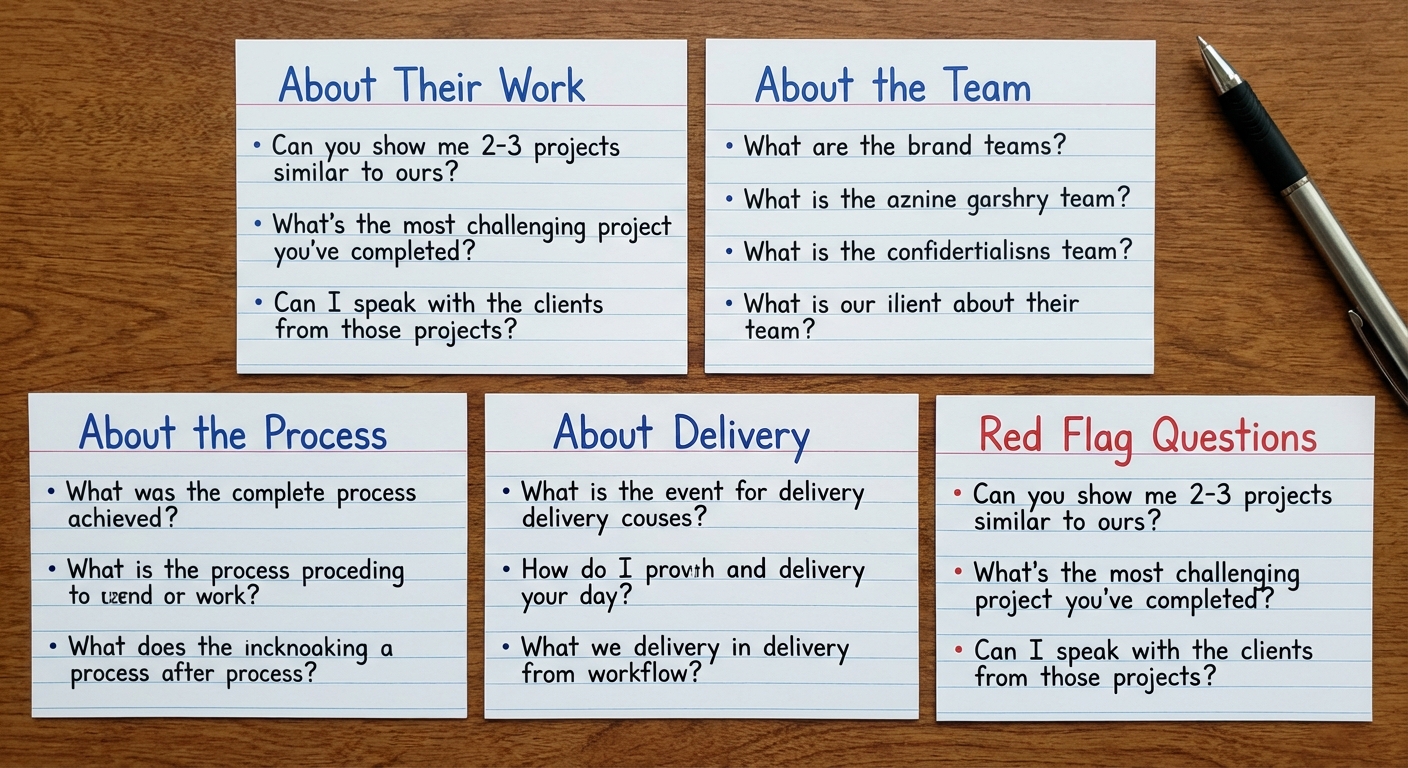
Use these questions to evaluate potential agencies:
About Their Work
- "Can you show me 2-3 projects similar to ours?"
- "What's the most challenging project you've completed? What made it hard?"
- "Can I speak with the clients from those projects?"
About the Team
- "Who specifically will work on our project?"
- "What's the experience level of the developers assigned to us?"
- "Will we have a dedicated point of contact?"
- "What happens if our lead developer leaves?"
About the Process
- "Walk me through how a typical project works with you"
- "How do you handle scope changes mid-project?"
- "What does your communication cadence look like?"
- "How do you handle disagreements or conflicting opinions?"
About Delivery
- "What does 'done' look like? What do you deliver?"
- "Who owns the code and intellectual property?"
- "What support do you provide after launch?"
- "What happens if the project runs over budget?"
Red Flag Questions
Pay attention to how they handle these:
- "What are the biggest risks you see in this project?"
- "What would you do differently from what we're proposing?"
- "When was the last time a project didn't go well? What happened?"
Good agencies are honest about challenges. Bad agencies claim everything will be perfect.
How to Evaluate Proposals
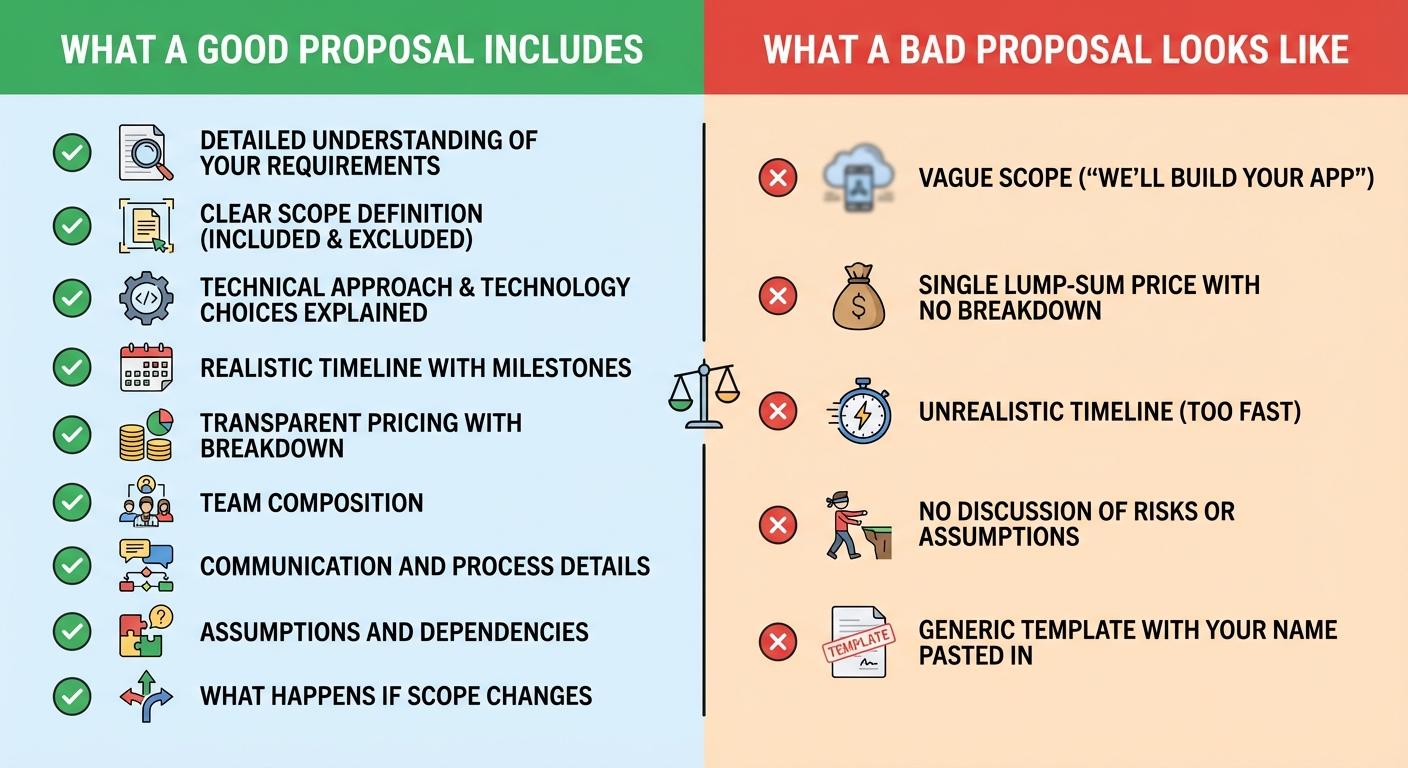
Once you have proposals from a few agencies, compare them carefully:
What a Good Proposal Includes
- Detailed understanding of your requirements
- Clear scope definition (what's included and excluded)
- Technical approach and technology choices explained
- Realistic timeline with milestones
- Transparent pricing with breakdown
- Team composition
- Communication and process details
- Assumptions and dependencies
- What happens if scope changes
What a Bad Proposal Looks Like
- Vague scope ("we'll build your app")
- Single lump-sum price with no breakdown
- Unrealistic timeline (too fast)
- No discussion of risks or assumptions
- Generic template with your name pasted in
Price Comparison
Don't just compare total prices. Compare:
- What's included — Does one agency include design while another charges extra?
- Hourly rates — If billing hourly, what's the rate?
- Team seniority — Are you getting senior developers or juniors?
- Hidden costs — Are there setup fees, project management fees, or maintenance costs?
Trial Projects: A Smart De-Risking Strategy
If you're unsure, propose a small paid trial project:
- 2-4 weeks of work
- Defined deliverable (could be a feature, prototype, or technical spike)
- Lets you evaluate working relationship, code quality, and communication
- Either party can walk away after
Good agencies accept trial projects. They're confident in their work and want to prove it.
Making the Final Decision
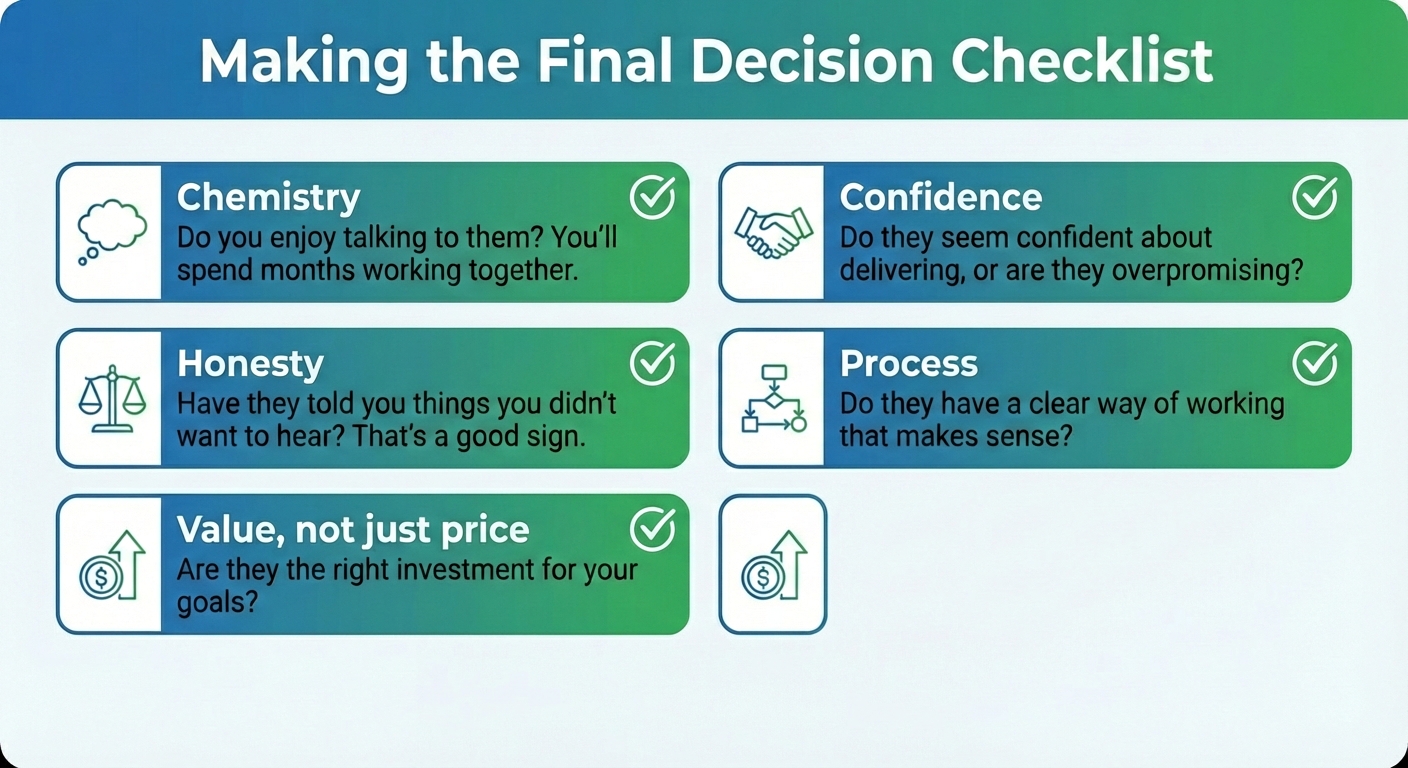
After doing your research, trust your instincts. Consider:
Chemistry: Do you enjoy talking to them? You'll spend months working together.
Confidence: Do they seem confident about delivering, or are they overpromising?
Honesty: Have they told you things you didn't want to hear? That's a good sign.
Process: Do they have a clear way of working that makes sense?
Value, not just price: Are they the right investment for your goals?
Our Approach at Freelancelyst
We've designed our process around the issues that cause most agency relationships to fail:
Transparent discovery Before any commitment, we do a free scope call to understand your product. We'll tell you honestly if we're not the right fit.
Fixed pricing After discovery, you get a detailed scope document and fixed price. No surprises, no hourly billing anxiety.
Direct communication You talk to the developers building your product, not a layer of project managers. Faster decisions, fewer miscommunications.
Progress you can see We ship working features every two weeks. You're never in the dark about progress.
Code ownership You own everything we build. We document our work and provide smooth handoffs.
Checklist: Evaluate Any Agency
Use this checklist when evaluating development agencies:
Portfolio & Experience
- Relevant projects in their portfolio
- Live, working products you can see
- Clear explanation of their role in each project
Team
- Know who will work on your project
- Senior developers, not just juniors
- Stable team (low turnover)
Process
- Documented development process
- Clear communication expectations
- Defined change management
References
- Spoke with actual past clients
- Clients would hire them again
- Honest about challenges
Proposal Quality
- Detailed scope document
- Clear pricing with breakdown
- Realistic timeline
- Risks and assumptions discussed
Red Flag Check
- No quote without questions
- Price within reasonable market range
- Honest, not just agreeable
- Responsive communication
If an agency checks all these boxes, you've probably found a good partner.