In-House vs Outsourced Development: How to Decide (2026)
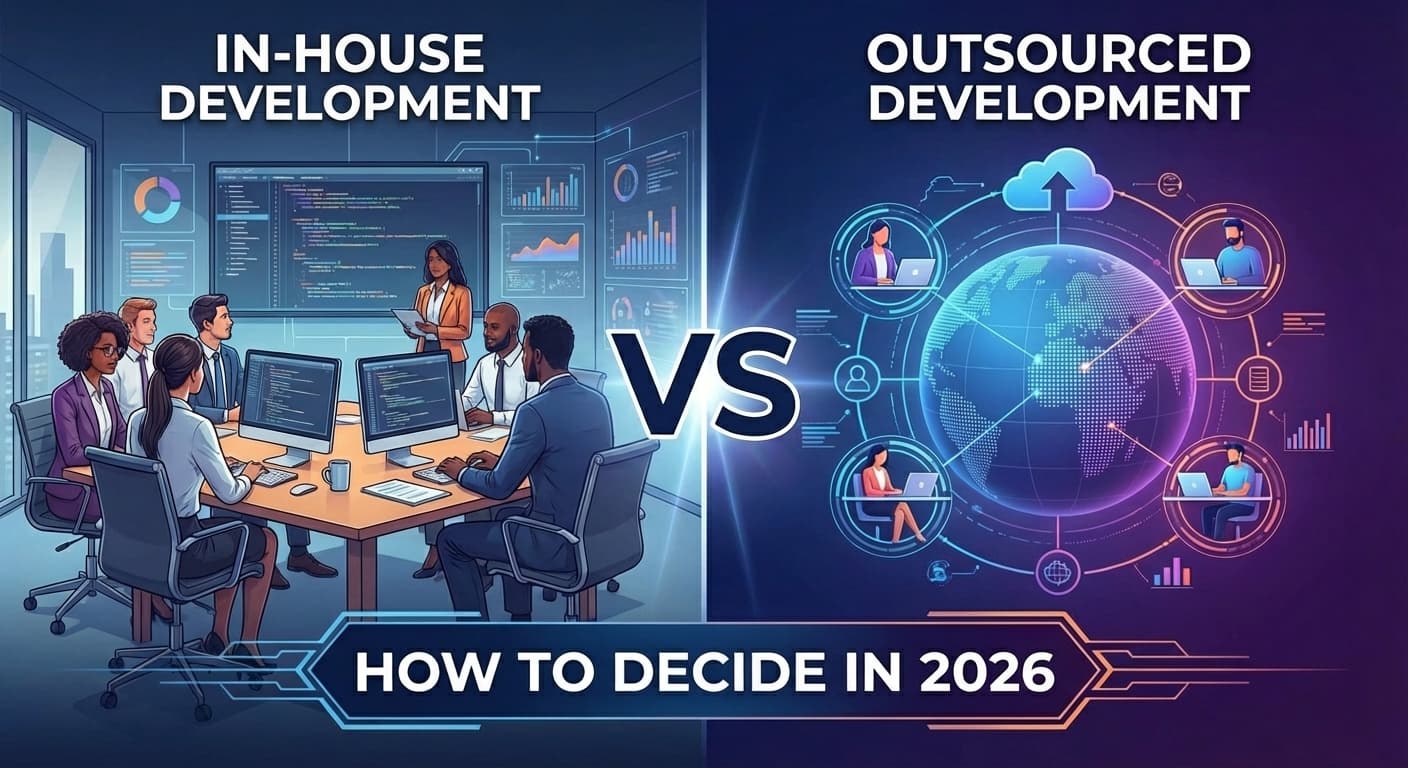
"Should we build an in-house team or outsource development?"
I hear this question from founders constantly. And my answer is always the same: it depends on what you're optimizing for.
Both approaches work. Both have tradeoffs. The right choice depends on your stage, budget, timeline, and what you're building.
After working with dozens of companies — some who outsourced to us, some who later built in-house teams, some who do both — here's a realistic breakdown of each option.
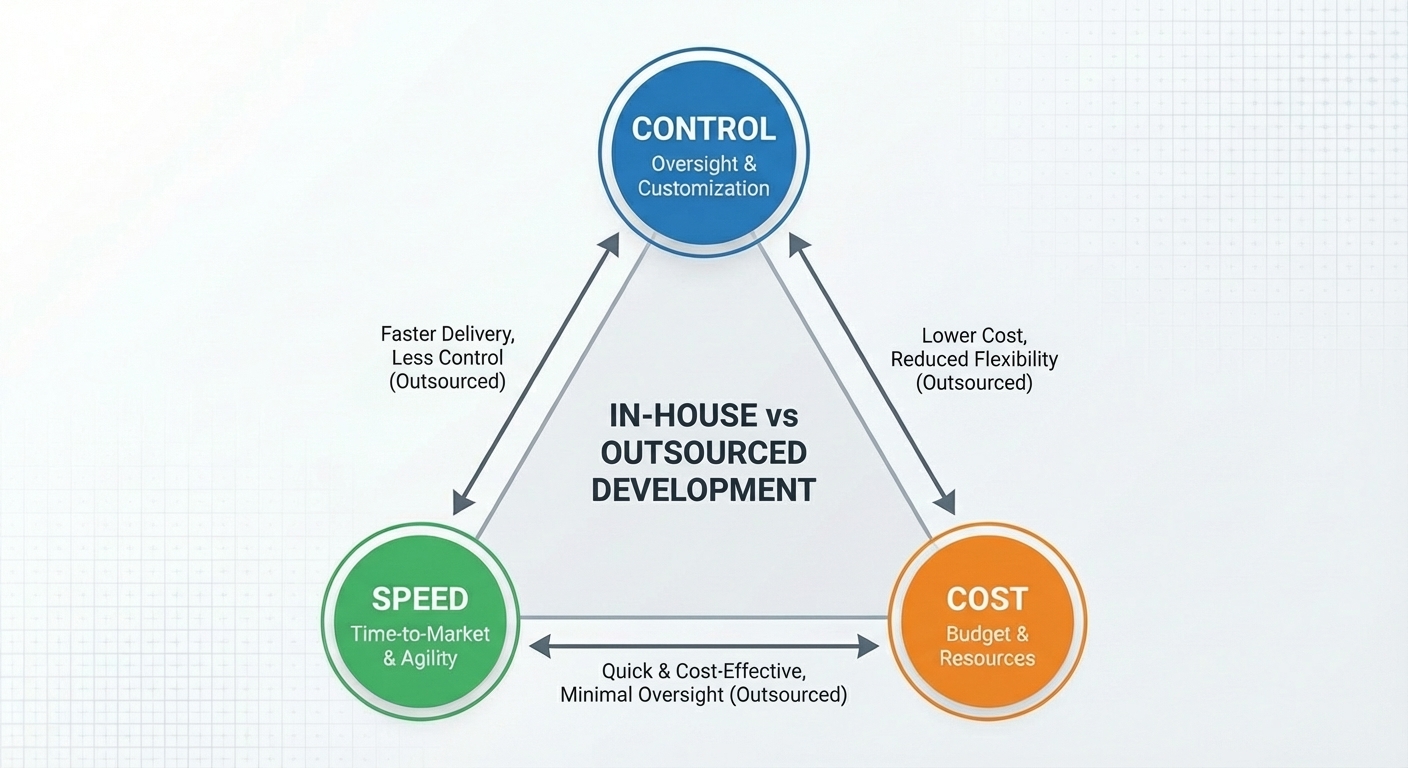
The Real Question: Control vs. Speed vs. Cost
Every development decision comes down to three factors:
- Control — How much oversight do you need over the process?
- Speed — How quickly do you need to move?
- Cost — What's your budget, both now and long-term?
You can optimize for two of these. Rarely all three.
When In-House Makes Sense
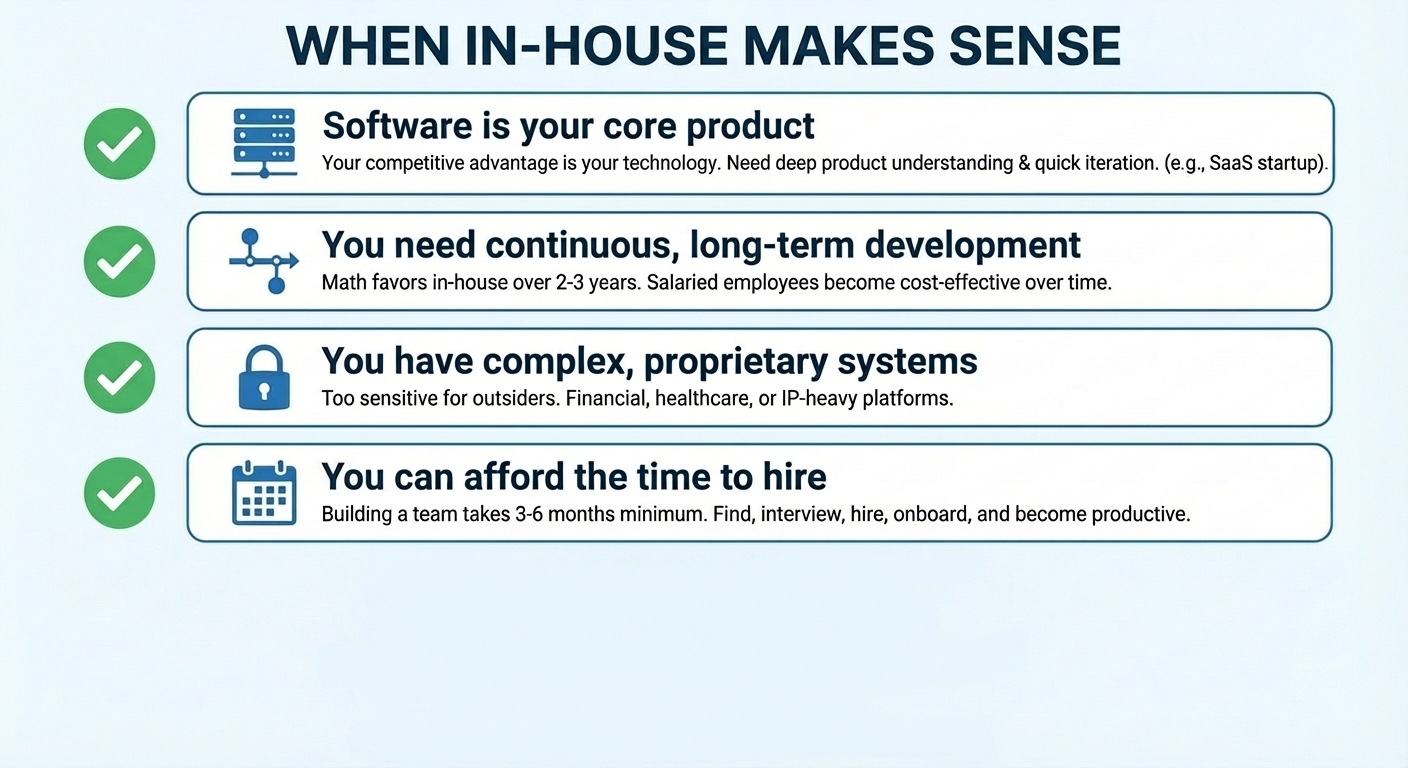
Building an internal development team is the right choice when:
1. Software is your core product
If you're a software company, your competitive advantage is your technology. You need developers who deeply understand your product, can iterate quickly, and think long-term about architecture.
Example: A SaaS startup where the product is the software. Every feature, every optimization matters. You need people who live and breathe your codebase.
2. You need continuous, long-term development
If you'll need developers indefinitely, the math eventually favors in-house. Hiring is expensive upfront, but salaried employees become cost-effective over 2-3 years compared to ongoing outsourcing.
3. You have complex, proprietary systems
Some systems are too complex or sensitive to hand to outsiders. Financial trading systems, healthcare platforms with strict compliance requirements, or products with significant intellectual property concerns.
4. You can afford the time to hire
Building a good team takes 3-6 months minimum. You need to find candidates, interview, hire, onboard, and get them productive. If you're in a rush, this timeline doesn't work.
The real cost of in-house:
| Cost | Amount (US market) |
|---|---|
| Senior developer salary | $120,000 - $180,000/year |
| Benefits (healthcare, etc.) | $20,000 - $40,000/year |
| Equipment, software, tools | $5,000 - $10,000/year |
| Office/remote setup | $5,000 - $15,000/year |
| Recruiting costs | $10,000 - $30,000 per hire |
| Management overhead | 10-20% of your time |
A single senior developer costs $150,000-$250,000/year fully loaded. A small team of 3-4 developers runs $500,000-$1,000,000 annually.
And that's assuming you hire well. A bad hire costs even more — in lost time, cleanup work, and starting over.
When Outsourcing Wins
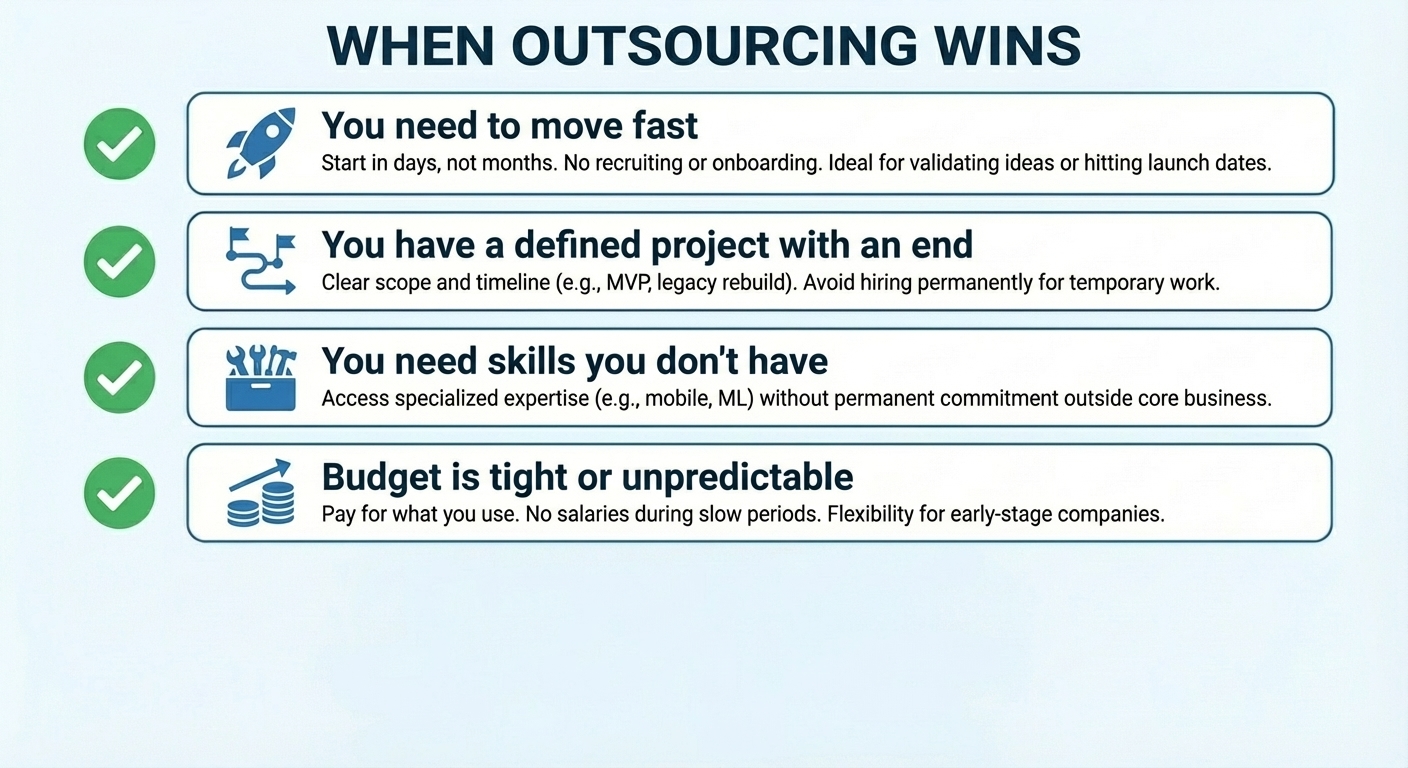
Outsourcing makes more sense when:
1. You need to move fast
A good agency can start in days, not months. No recruiting, no onboarding, no ramping up. They've built similar things before and can hit the ground running.
This is huge for startups. When you're racing to validate an idea or hit a launch date, waiting 6 months to hire a team isn't an option.
2. You have a defined project with an end
Building an MVP? Rebuilding a legacy system? Adding a specific feature? If the work has a clear scope and timeline, outsourcing often makes more sense than hiring permanently.
Why hire four developers for a 6-month project, then figure out what to do with them afterward?
3. You need skills you don't have
Maybe you need mobile development for one project, or machine learning expertise for a specific feature. Outsourcing lets you access specialized skills without committing to permanent hires in areas outside your core business.
4. Budget is tight or unpredictable
With outsourcing, you pay for what you use. No salaries during slow periods. No severance if things don't work out. This flexibility matters, especially for early-stage companies.
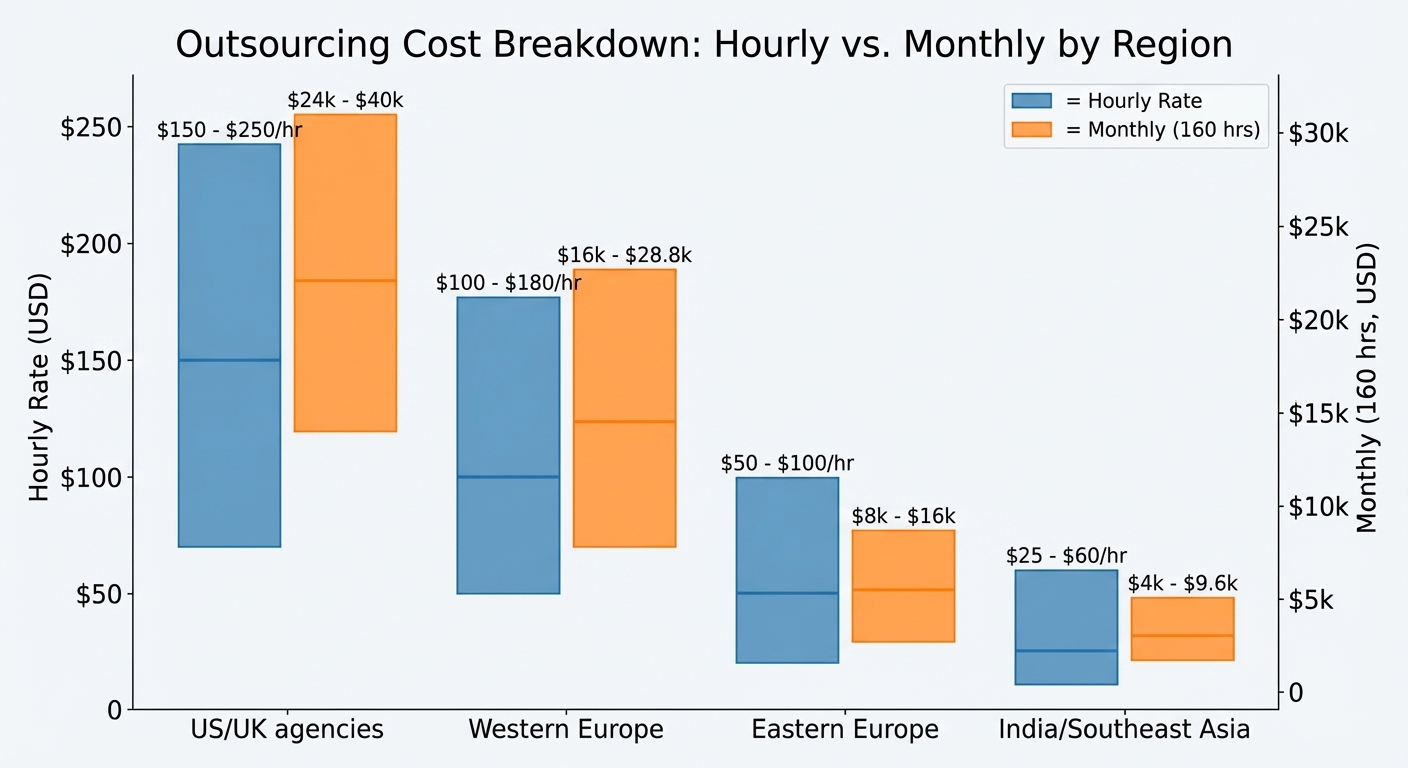
Rates vary wildly by quality. The cheapest option is rarely the best value. We've rebuilt more projects than I can count that were initially outsourced to the lowest bidder.
The Hybrid Model (What We Actually Recommend)
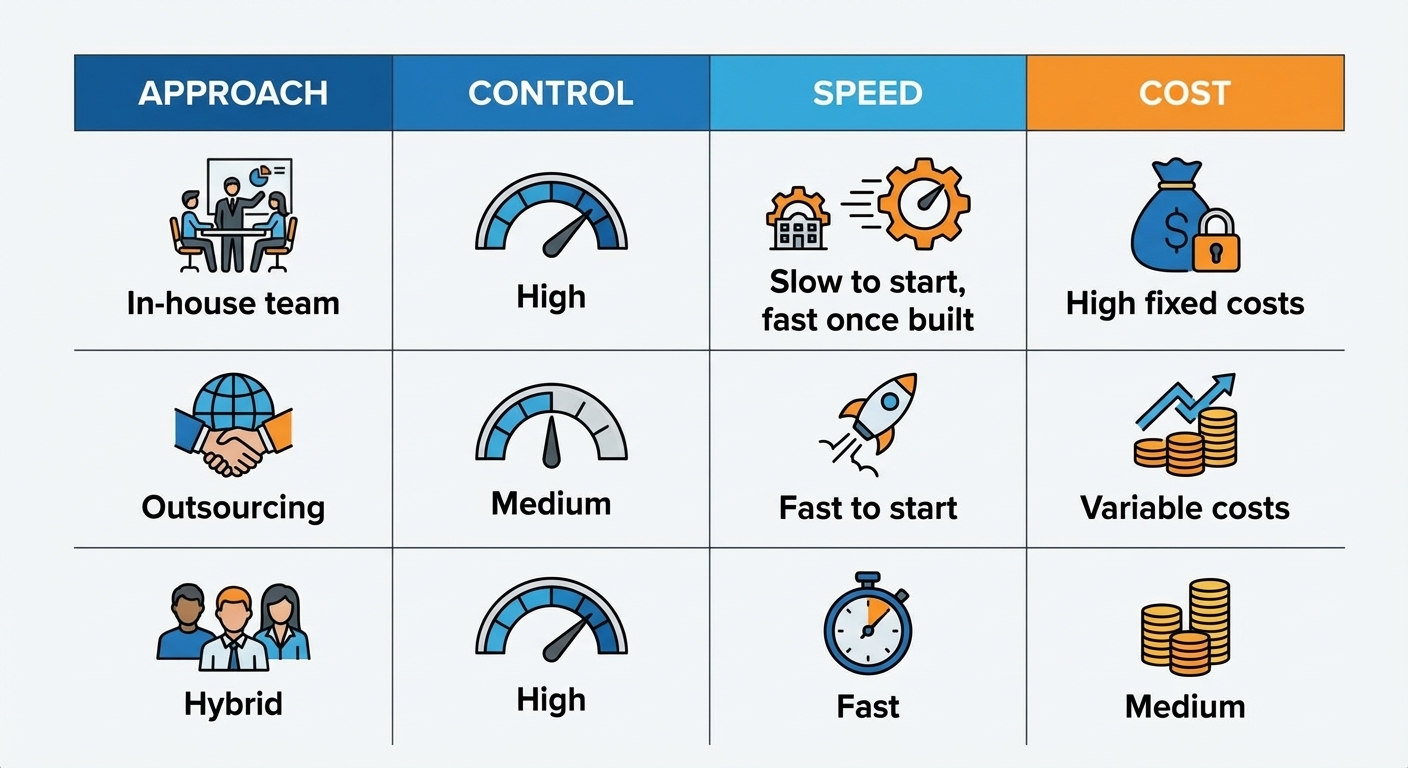
Most successful companies we work with use a hybrid approach:
- Small in-house core — 1-3 developers who understand the business deeply, manage technical direction, and review all code
- Outsourced capacity — External team(s) for building features, handling overflow, or specialized work
This gives you:
- Institutional knowledge that stays with the company
- Flexibility to scale up or down
- Cost efficiency (you're not paying full salaries for variable workloads)
- Quality control (your internal team reviews everything)
How it works in practice:
- Your in-house technical lead defines requirements and architecture
- External team builds features according to specs
- In-house team reviews code, handles deployment, manages production
- External team handles bug fixes and iterations
We've been the external team in this setup many times. It works well when there's clear communication and defined processes.
Red Flags When Hiring an Agency
Not all outsourcing is equal. Here's what to watch for:
1. No discovery phase
If an agency gives you a fixed price after a single call, they're either padding heavily or setting you up for scope creep. Good agencies insist on understanding the problem before proposing solutions.
2. They say yes to everything
A good partner pushes back. They question requirements that don't make sense. They suggest simpler alternatives. If they just nod and take notes, they're either not engaged or planning to figure it out later (at your expense).
3. You can't talk to developers
If all communication goes through project managers who "translate" for developers, information gets lost. You should have direct access to the people writing your code.
4. No code ownership clause
Make sure your contract states you own all code produced. This seems obvious, but I've seen companies trapped by agencies who retain IP rights.
5. Vague pricing
"Time and materials" without estimates is a blank check. Insist on detailed estimates, regular check-ins, and a process for handling scope changes.
What Good Outsourcing Looks Like
When outsourcing works well, it feels like having an extension of your team. Here's what we try to do:
Transparency
- Daily or weekly updates on progress
- Access to code repository from day one
- Clear tracking of hours and tasks
- No surprises at billing time
Documentation
- Technical decisions documented as we make them
- Handoff documentation included in every project
- Code comments for complex logic
- README files that actually explain how things work
Knowledge transfer
- We assume someone else will maintain this code
- We write code for readability, not cleverness
- We train your team before we leave
Accountability
- Fixed-price means fixed-price (within agreed scope)
- We flag issues early, not at deadline
- We own our mistakes and fix them
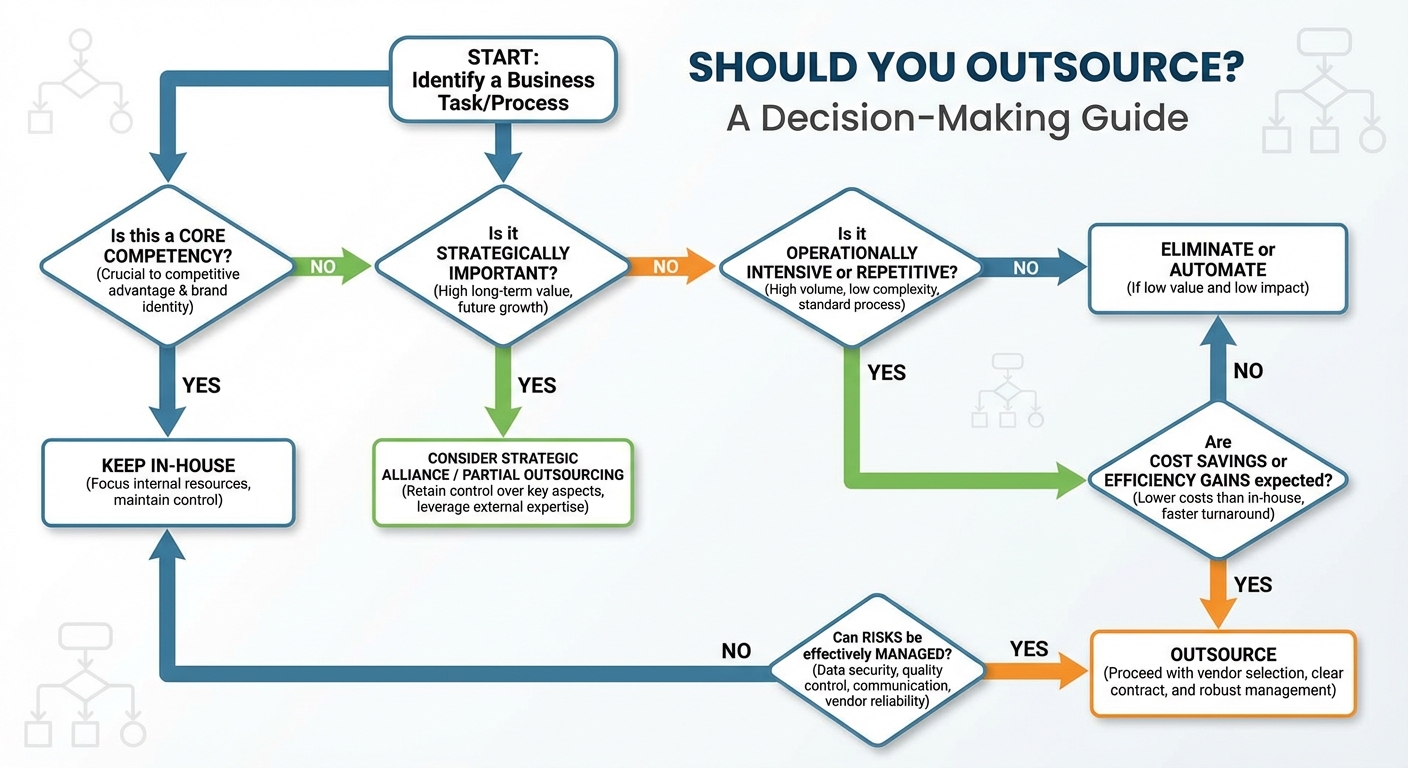
Decision Framework: A Simple Checklist
Answer these questions to guide your choice:
Go in-house if:
- Software is your core product and competitive advantage
- You need developers continuously for 2+ years
- You have 3-6 months to hire and onboard
- You can afford $150K+ per developer annually
- You have someone technical to evaluate candidates and manage the team
Go outsourced if:
- You need to launch in weeks, not months
- The project has a defined scope and end date
- You need specialized skills you won't use long-term
- Budget is tight or unpredictable
- You don't have technical leadership to hire/manage developers
Go hybrid if:
- You want the best of both
- You have at least one technical person in-house
- You need flexibility to scale up and down
- You're building a product but not ready for a full team
The Question Most People Get Wrong
Here's what I've learned: most companies outsource for the wrong reasons.
They outsource because they think it's cheaper. Sometimes it is. Often it isn't.
They outsource because they think it's faster. It can be. But only if you choose the right partner and manage the relationship well.
The right reason to outsource is this: you need capabilities you don't have, faster than you can build them internally.
That's it. If you can hire good developers in your timeline and budget, do it. If you can't, find a good partner.
And if you do outsource, treat your external team like partners, not vendors. The best results come from collaboration, not just handing off requirements and waiting for delivery.
Making Your Decision
Still not sure? Here's what I'd suggest:
-
Define your project clearly. What are you building? What's the timeline? What's the budget?
-
Assess your internal capabilities. Do you have someone who can evaluate technical work? Can you manage an external team?
-
Get quotes from 2-3 agencies. Compare not just price, but approach. Do they ask good questions? Do they understand your business?
-
Start small. If you're unsure about a partner, start with a small project. See how they communicate, how they handle problems, what the code quality is like.
-
Build the relationship. The best outsourcing relationships improve over time. Give feedback. Be direct about what's working and what isn't.
Considering outsourcing your next project? We help startups and growing businesses build web applications without the overhead of a full-time team. Schedule a free consultation to discuss your needs — no sales pitch, just an honest conversation about whether we're the right fit.